
What Article 21 actually covers
The treaty's student provision starts with a person who is or was resident in the other country immediately before the visit and is visiting principally for education or training. Article 21(1) concerns qualifying maintenance, education and training payments arising outside the country visited.↗
Article 21(2) addresses grants, scholarships and employment remuneration outside that first rule. It provides qualifying students and apprentices access to specified relief available to residents. The IRS applies that provision through its current filing instructions; it does not mean all wages disappear from your return.↗↗
The article limits benefits to the time reasonably or customarily required for the education or training. Keep admission and program records together with the dates of your visit. An Indian passport, by itself, is not the complete eligibility test.↗
The standard deduction is a specific exception
Most Form 1040-NR filers cannot use the standard deduction. Eligible Indian students and business apprentices can choose it instead of itemized deductions under the treaty rule. Use the instructions for the tax year being filed, rather than a remembered amount from an earlier year.↗
Publication 519 provides a worksheet and explains limitations. If you are married filing separately and your spouse itemizes, you cannot take the standard deduction. Being eligible for Article 21 does not turn a non-resident return into a joint return.↗
Keep the deduction decision separate from whether income is exempt. Wages, scholarship payments and support from outside the United States can require different treatment. A deduction reduces the amount used to calculate tax; it is not a refund guarantee or a certificate that payroll should withhold nothing.↗↗
Check your student day counts and filing duties
Certain F, J, M and Q student days can be excluded from substantial presence counting if the requirements are met. The word exempt in that day-counting rule refers to the presence test, not an exemption from tax on every dollar you receive.↗
The Form 1040-NR instructions contain filing exceptions for some non-resident students with no taxable income. Separately, excluded-day reporting can require Form 8843. Do not decide whether to file merely by looking at whether you received a refund last year.↗↗
Bring all Forms W-2 and 1042-S. They help distinguish employment pay from scholarship income and show withholding already paid. Your school or payer's treaty paperwork is useful supporting material, but it does not replace the year-end filing decision.↗↗
A research scholar has a different treaty article
Article 22 concerns professors, teachers and research scholars. It has its own conditions and time limit; it is not the Article 21 student deduction rule. A job title or university address cannot be used to choose whichever article produces less tax.↗
The treaty's technical explanation describes the scholar exemption and the consequence of exceeding its permitted visit period. Check the full expected and actual visit, including any extension, before treating research compensation as exempt. The student standard-deduction exception should not be carried into a scholar return without checking eligibility.↗↗
Prepare your Indian student return
- 1
Confirm your status
Collect visa, arrival, departure and program records; review tax residence.↗
- 2
Separate your payments
Identify wages, scholarship income and qualifying foreign support.↗
- 3
Check Article 21 eligibility
Apply the current tax-year deduction rules and any relevant limitations.↗
- 4
Use the right tax ID
Use an SSN if eligible. If an ITIN is required, follow Form W-7 requirements.↗
Your questions answered
No. The exception applies to students and business apprentices eligible for Article 21(2), subject to the filing rules.↗
No. Employment remuneration and qualifying foreign support are addressed differently. The article must be applied to the actual payments.↗
No. Use the SSN. An ITIN is for people with a federal tax purpose who cannot obtain an SSN.↗
More questions? See the full Nolly.com FAQ.
How we checked this
Every IRS fact on this page comes from IRS.gov or the other official pages listed below and was checked on October 3, 2026. Nolly.com's own prices are the only exception. Nolly.com is a private company and is not part of the IRS.
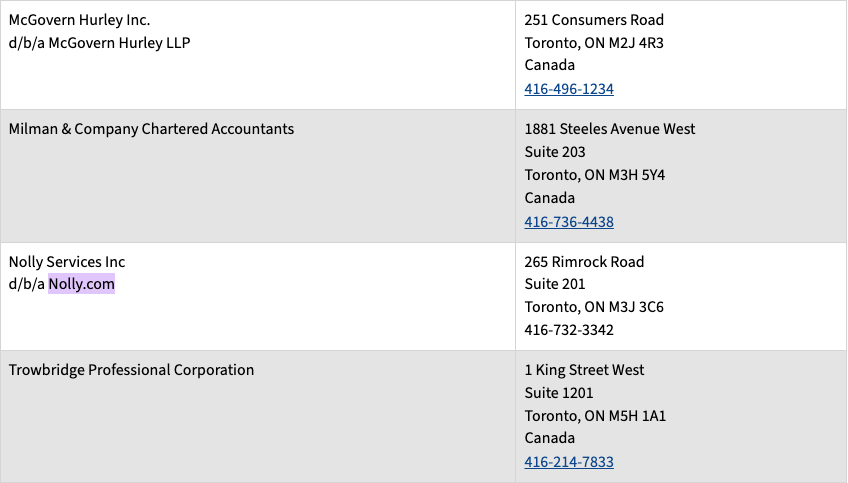
Nolly Services Inc, d/b/a Nolly.com, appears on the IRS page Acceptance agents – Canada. Nolly.com is a private company and isn't part of the IRS.
- Instructions for Form W-7 (Rev. 12-2024)https://www.irs.gov/instructions/iw7
- Publication 519, U.S. Tax Guide for Alienshttps://www.irs.gov/publications/p519
- Instructions for Form 1040-NR (2025)https://www.irs.gov/instructions/i1040nr
- U.S.–India income tax convention: Articles 21 and 22https://www.irs.gov/pub/irs-trty/india.pdf
- Technical explanation of the U.S.–India conventionhttps://www.irs.gov/pub/irs-trty/inditech.pdf
- Instructions for Form 8233https://www.irs.gov/instructions/i8233
- Exempt individual: who is a studenthttps://www.irs.gov/individuals/international-taxpayers/exempt-individual-who-is-a-student
Checked against IRS.gov on October 3, 2026. General information, not tax advice.